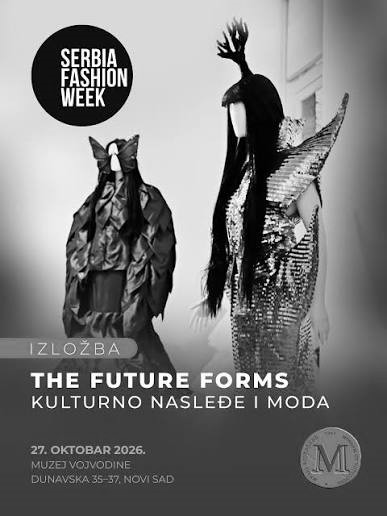
Serbia Fashion Week: From Paris to Novi Sad – Rethinking Fashion’s Global Map
Fashion has a geography. For decades, Paris, Milan, London and New York have occupied the centre of the industry’s imagination, shaping not only trends but also the perception of what makes a designer, a collection or a fashion event internationally significant. Yet fashion does not begin and end with its most established capitals. Across Europe and beyond, fashion weeks are building platforms for designers, connecting creative communities and developing their own relationships with the international industry. Their importance raises a question worth asking: what makes a fashion week valuable when it operates outside the traditional centres of fashion power?
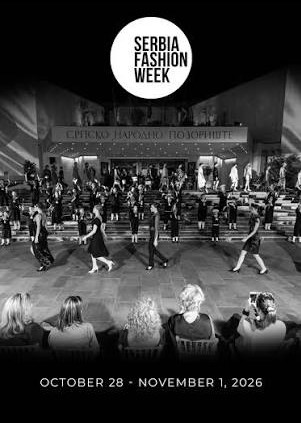
Serbia Fashion Week, held in Novi Sad from October 27th to October 31rst, offers an interesting perspective on this question.
More Than a Runway
A fashion week can be understood as a sequence of shows. But its deeper value lies in what happens around them. Serbia Fashion Week brings together domestic and international designers through a broader programme that includes runway presentations, educational activities, exhibitions and talent competitions. Its stated mission also extends to the development of fashion, accessories and textiles, with an emphasis on creating opportunities for the next generation of designers.
This wider framework matters. Fashion is not an isolated creative practice. It depends on networks of production, knowledge, communication and professional exchange. A collection may establish a designer’s visual identity, but opportunities to develop that identity into a sustainable professional practice require something more: access to audiences, industry relationships and spaces where creative work can be encountered beyond its immediate context. A fashion week becomes meaningful when it helps build those connections.
Visibility Is Not the Same as Opportunity
International visibility is one of the most frequently invoked promises of fashion weeks. Yet visibility alone is an incomplete measure of success. A runway presentation can generate photographs, media coverage and social media attention without necessarily creating a lasting professional opportunity. For emerging designers in particular, the real question is what follows the show.
Serbia Fashion Week’s combination of international presentations, educational programming and talent competitions reflects an ambition that extends beyond the immediate spectacle of the runway. The challenge for any fashion week pursuing this model is to turn those different activities into meaningful, continuing opportunities for its participants.
The Importance of Fashion Beyond the Traditional Centres
The international fashion system is not equally accessible to everyone. Established capitals benefit from accumulated institutional recognition, influential media networks and proximity to major commercial players. Designers working elsewhere may have equally compelling ideas but fewer opportunities to place their work within those networks. This is why regional fashion weeks deserve to be considered on their own terms.
Their significance does not depend on replicating Paris or Milan on a smaller scale. Rather, it depends on their ability to create relevant conditions for fashion to develop locally while engaging internationally. In this respect, Serbia Fashion Week represents an approach that connects a national creative scene with a wider network of designers and cultural activity. Its location in Novi Sad also places fashion within a city whose cultural identity extends beyond the industry itself.
Such platforms can contribute to the international circulation of ideas, aesthetics and creative practices. They can also help challenge the assumption that fashion’s cultural relevance must be validated by a handful of established capitals before it can be taken seriously elsewhere. The objective, therefore, should not be to replace one centre of authority with another. It should be to make the fashion landscape more connected, more plural and more receptive to different creative voices.
Fashion as Cultural Infrastructure
There is another dimension to the value of a fashion week: its relationship with culture. When fashion presentations exist alongside exhibitions, educational programmes and other artistic disciplines, the event can become a meeting point between design and broader cultural production. Clothing is no longer presented exclusively as a product or a seasonal proposition. It can also be approached as a medium through which identity, craftsmanship, heritage and contemporary visual culture are expressed.
Serbia Fashion Week’s multidisciplinary programme offers a framework for this wider understanding of fashion. Its significance, however, should not be measured simply by the number of activities taking place. What matters is whether those activities generate dialogue, encourage new perspectives and create lasting connections between creative fields. This is where a fashion week can move beyond event production and become part of a broader cultural infrastructure.

What Should We Expect from a Fashion Week Today?
The contemporary fashion landscape demands more from fashion weeks than a well-produced runway. Designers need opportunities to develop their work. Creative communities need platforms for exchange. International audiences need reasons to look beyond familiar names and established locations. And fashion institutions need to demonstrate that their programmes contribute something meaningful to the people they bring together.
For Serbia Fashion Week, as for any international fashion platform, the long-term measure of value lies not simply in the visibility of a particular edition but in the relationships, opportunities and creative developments that continue afterwards.This is also a useful way to reconsider the hierarchy of fashion weeks. Their significance cannot be established solely through prestige, geography or proximity to the traditional centres of power. It must also be considered through the opportunities they create, the creative voices they support and the connections they make possible.
Fashion does not become international simply by appearing in a recognised capital. It becomes international when ideas, people and creative practices can move across borders and find meaningful audiences. And this isexaclty where the real value of a fashion week lies: it is not how closely it resembles the established centres of fashion, but how much it contributes to a fashion system that needs more voices, more connections and more ways of being seen.