Where the sea becomes a stage, the body becomes architecture and summer is reclaimed as an attitude.
There is a particular kind of Mediterranean femininity that refuses to be decorative. It is sun-warmed, physical and unapologetically present. It belongs to the coast, to salt on the skin, to bare feet against stone, to the instinctive confidence of a woman who does not need permission to occupy space.
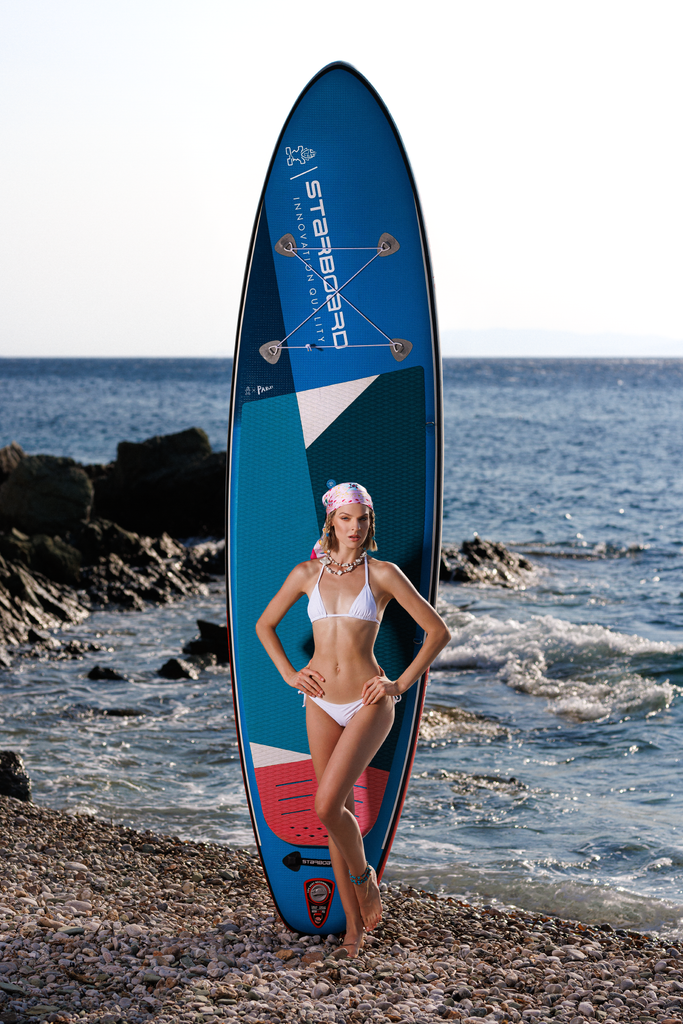
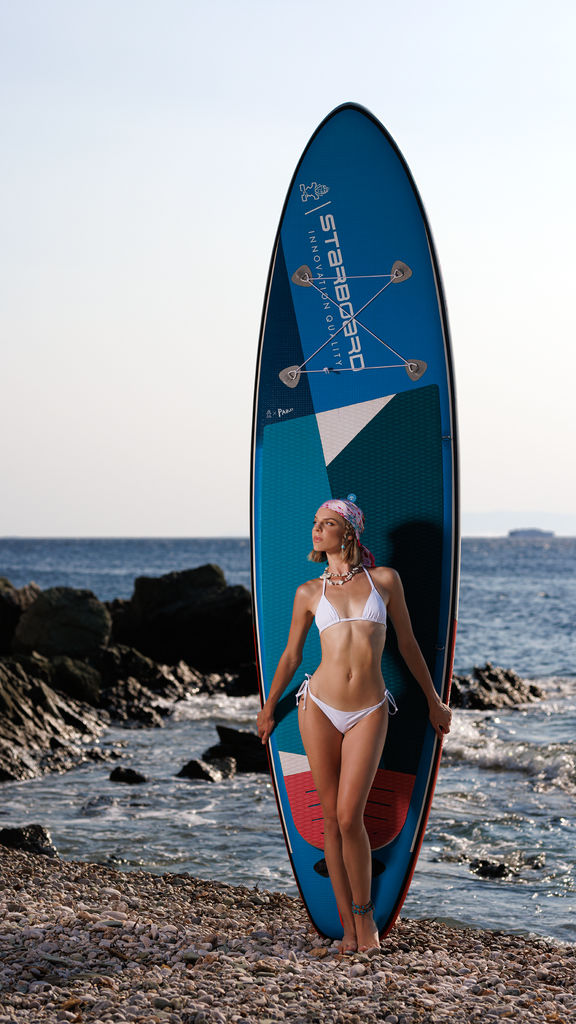
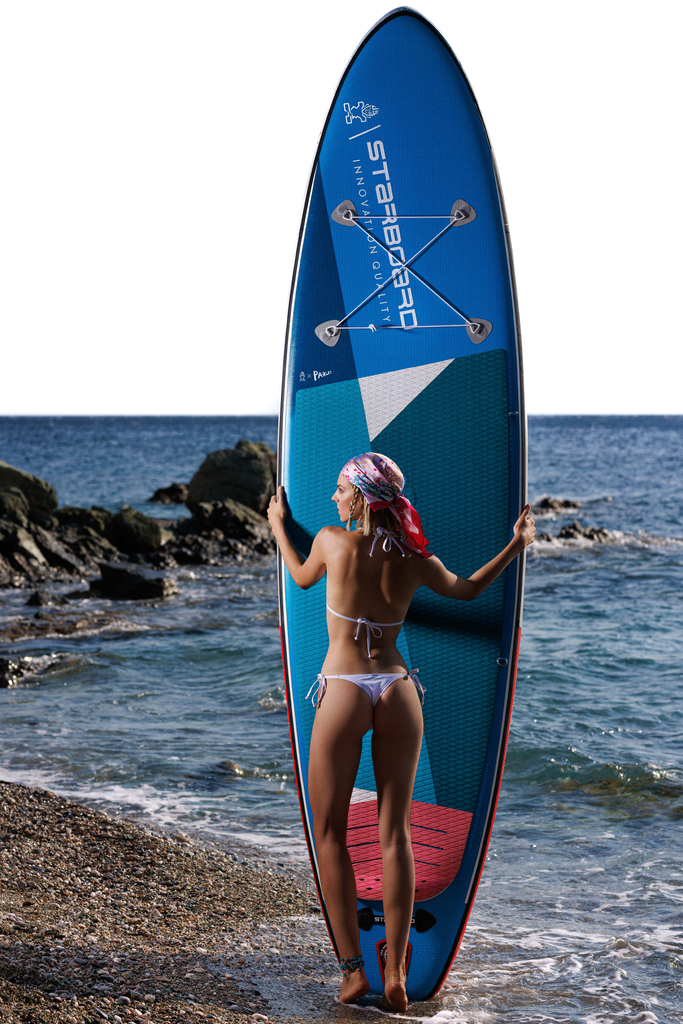
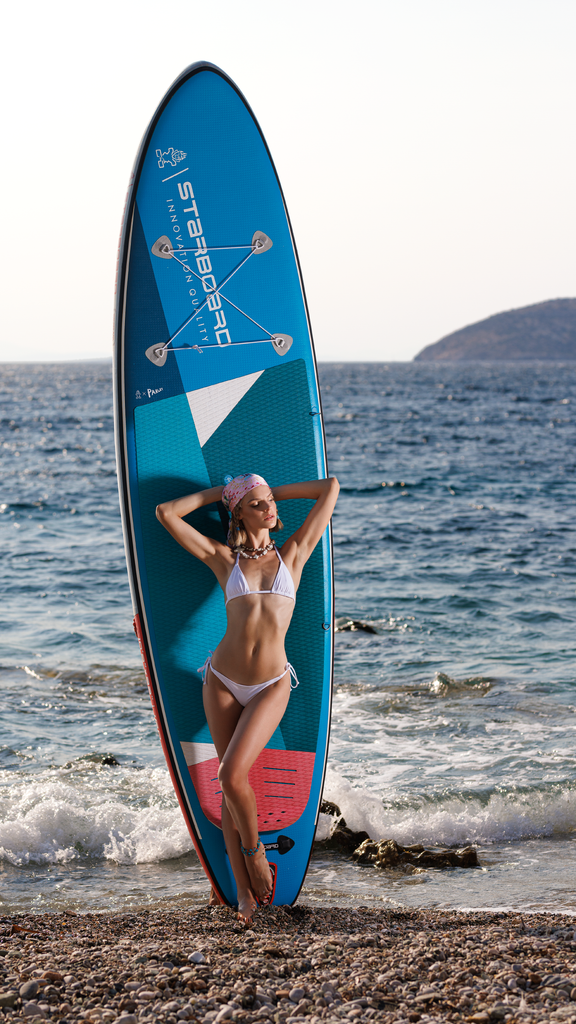
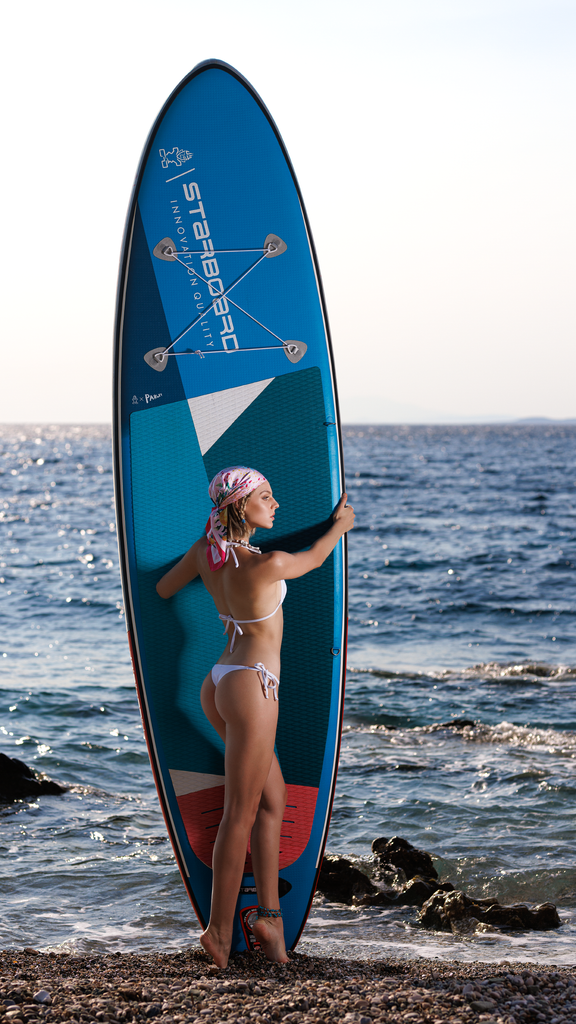
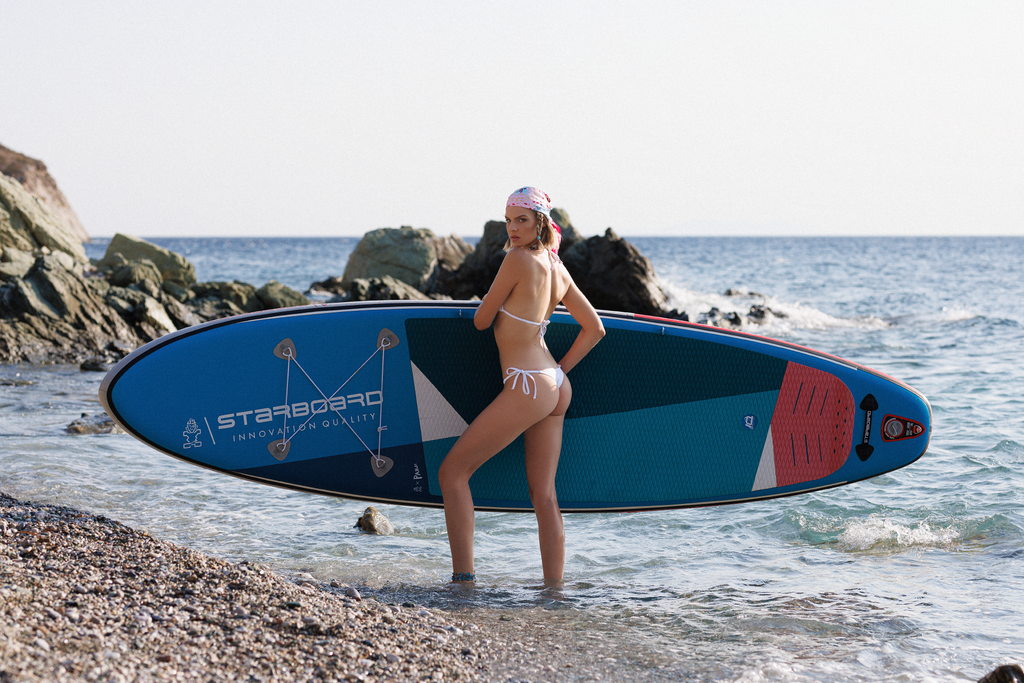
Here, the beach is not a postcard. It becomes a stage. The figure stands against the enormous geometry of the board, transforming what could be a simple image of summer into something more constructed. The surfboard rises almost like an architectural object behind her — a vertical frame that gives the body scale, structure and presence.
The contrast is deliberate: soft skin against hard surfaces, movement against geometry, water against construction. And somewhere between them, fashion finds its language.
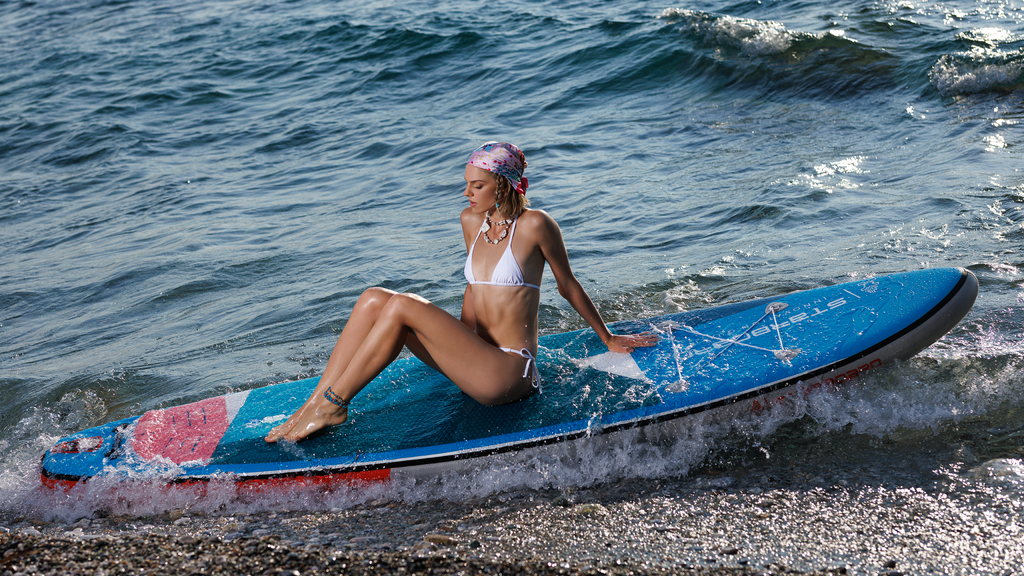
The bikini is stripped of unnecessary ornament. The styling feels personal rather than manufactured — a headscarf, layered jewellery, bare feet, the traces of a Mediterranean wardrobe assembled through instinct rather than trend.
Nothing needs to shout. The image works through attitude. This is not the fantasy of a distant Mediterranean. It is the Mediterranean as lived experience: imperfect rocks, changing light, salt water, heat, movement and a woman completely at ease within her own physicality.
The result is an image that sits somewhere between fashion editorial and modern mythology. And, well, the most contemporary Mediterranean image is not the one that sells a lifestyle. It is the one that captures a woman who already owns it.
RAW.F EDITORIAL NOTE: THE MEDITERRANEAN IS NOT A TREND. IT IS A LANGUAGE.
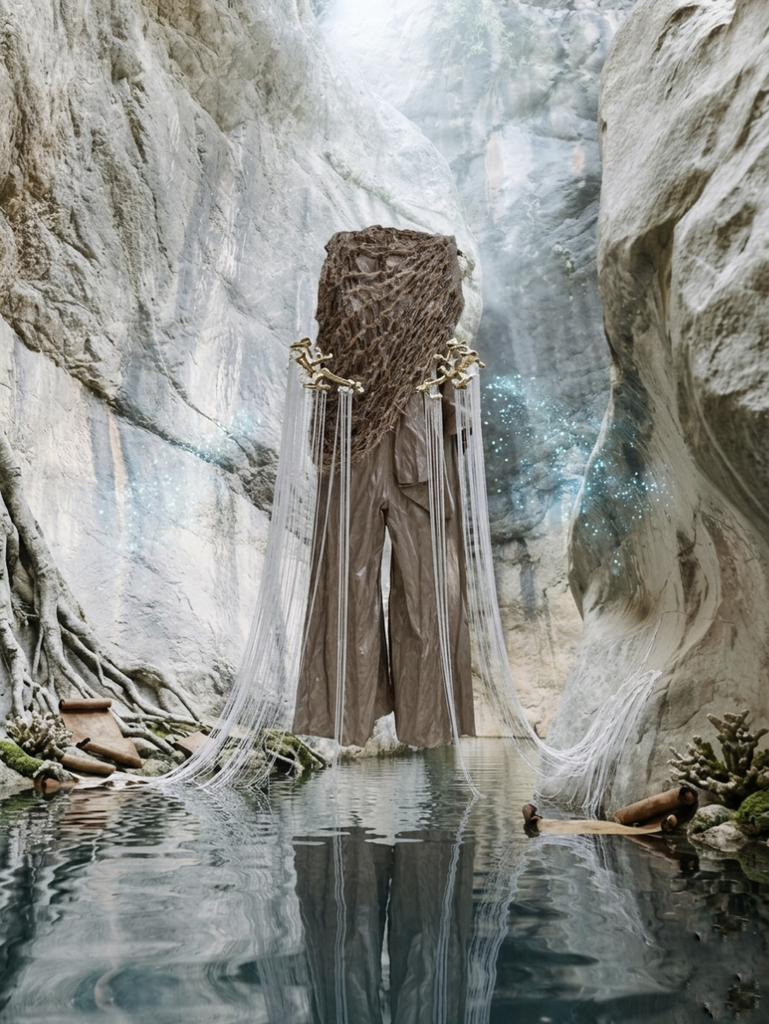
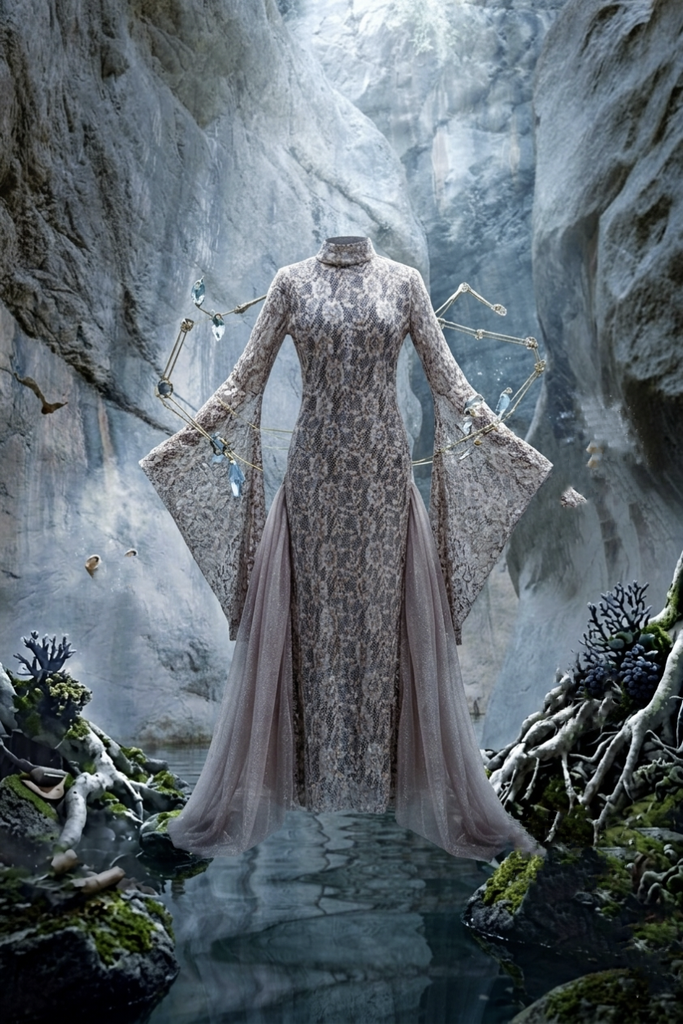
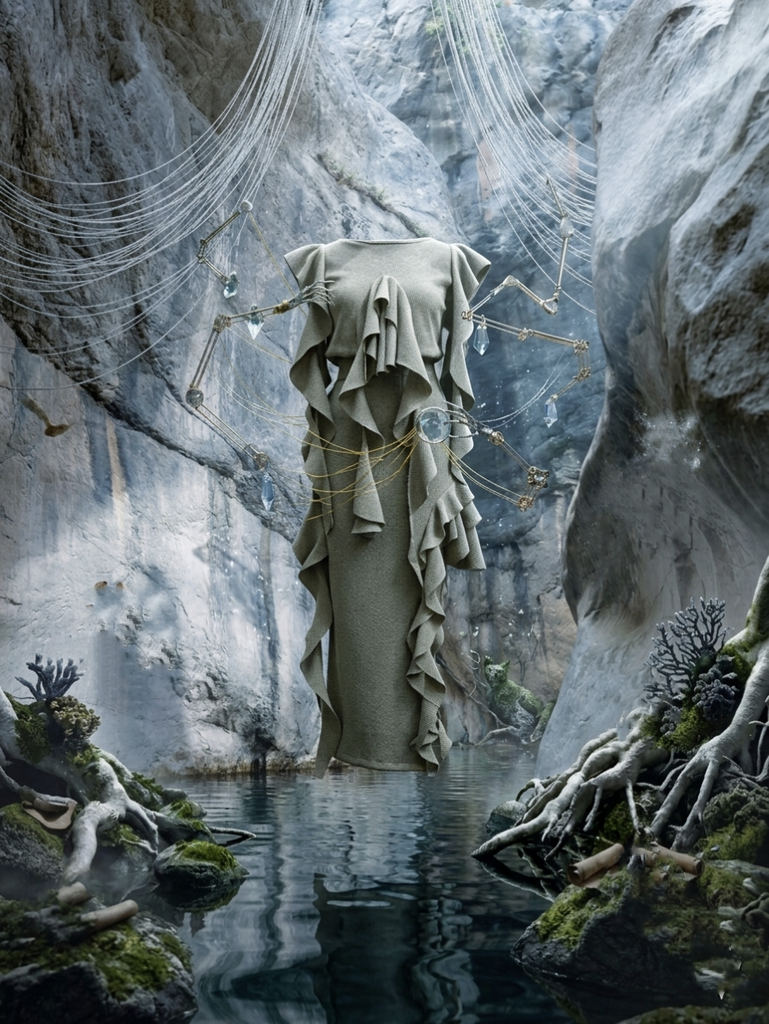
WHERE NYMPHS BECOME ALCHEMISTS, NATURE BECOMES TEXTILE, AND FASHION RETURNS TO MYTH. Nebula Alchemist
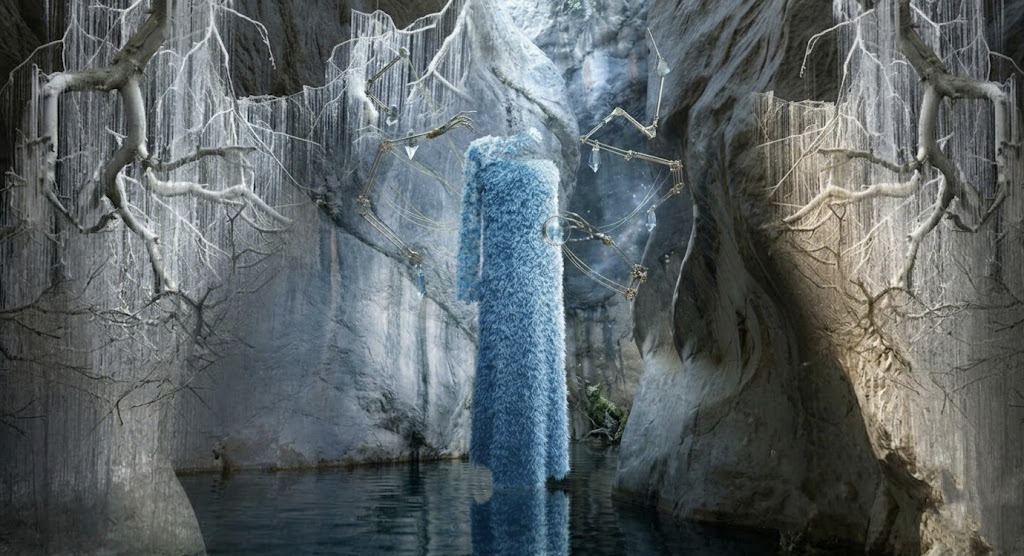
Nebula Alchemist enters a world where fashion is not separated from nature, but emerges from it.
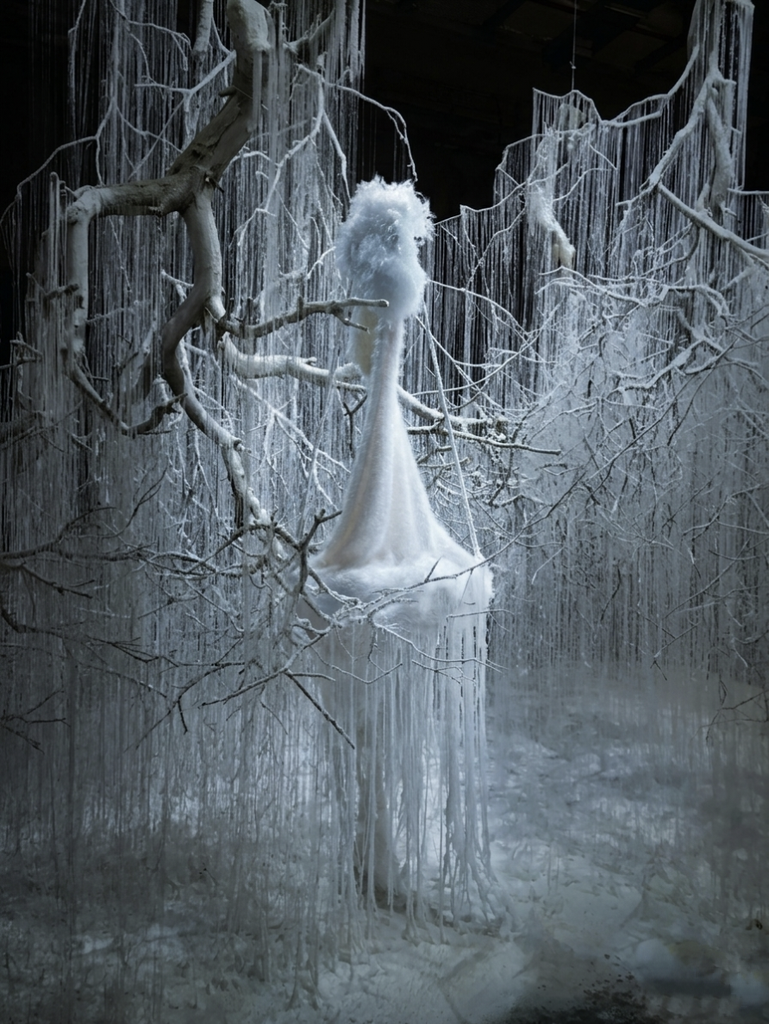
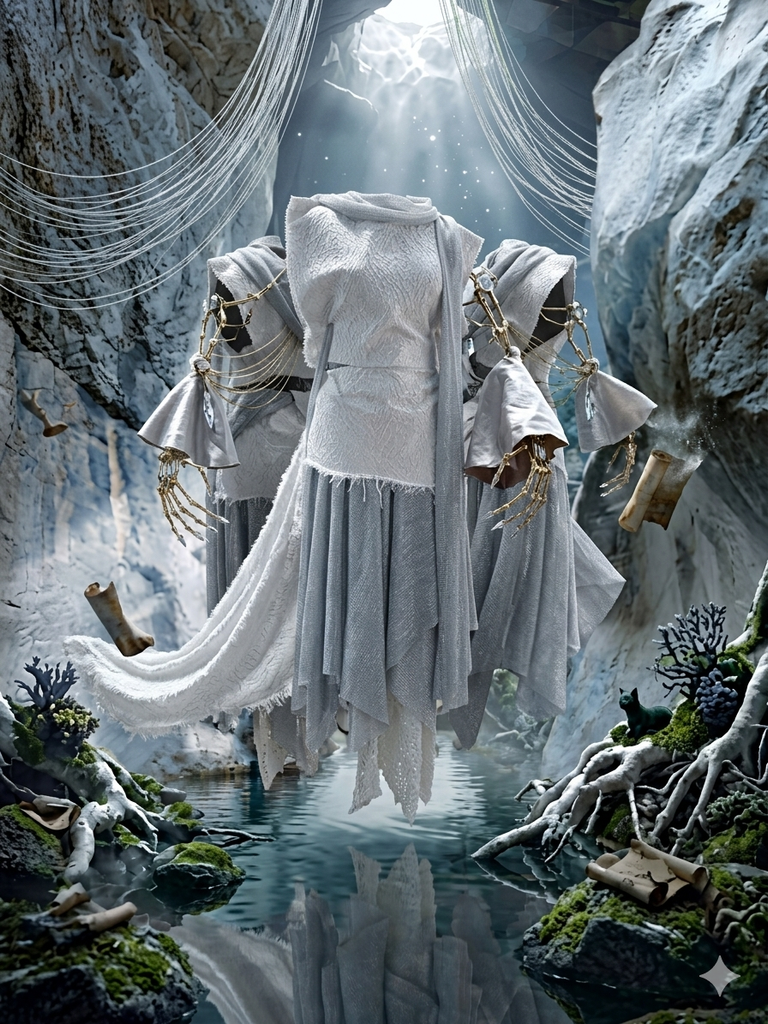
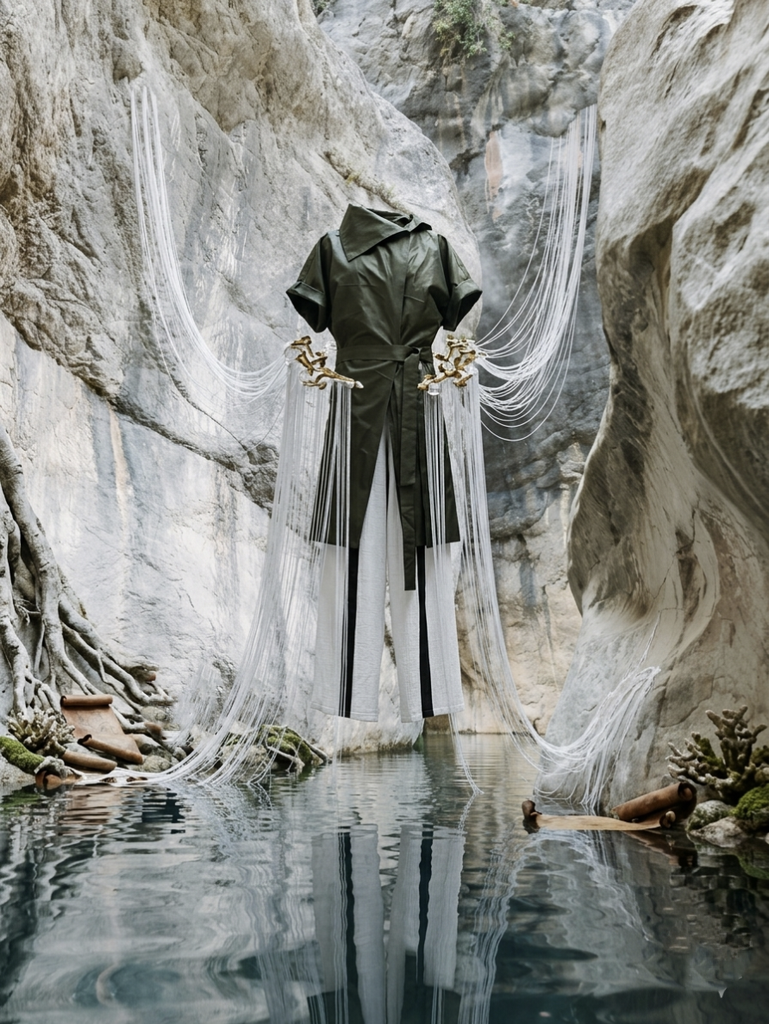
Inspired by the primordial Nymphs — Dryads, Naiads, Nereids and the ethereal forces of the sky — the collection imagines these beings as the first alchemists: transforming elements of the natural world into textile, ornament and form. Starlight becomes lace. Mud becomes taffeta. Water becomes silk.
At the centre of this universe stands Nefeli, the Nymph of the Clouds, a figure suspended between earth and cosmos. She embodies fluidity, transformation and the passage between visible and invisible worlds. In the designer’s vision, the garment is therefore not simply constructed; it is composed, as though it has evolved rather than been manufactured.
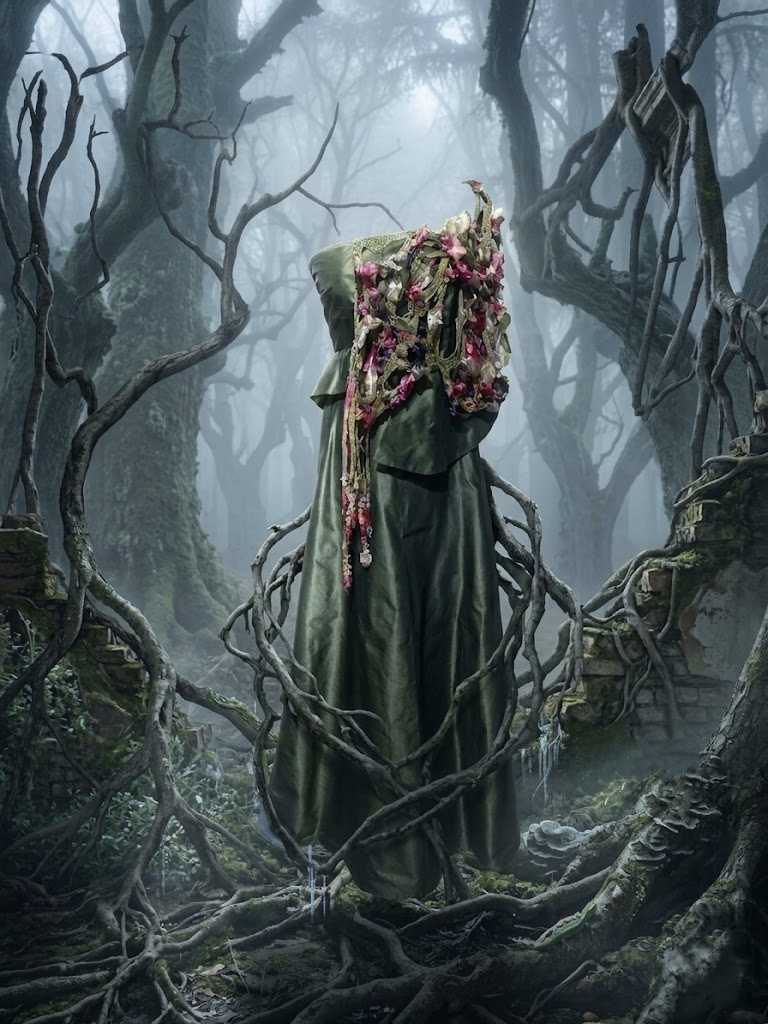
The visual language of Nebula Alchemist embraces dark botanical romanticism, organic textures, sculptural silhouettes and the evidence of time. Deep greens and muted natural tones meet flowers, roots, weathered surfaces and fragmented ornament. The body appears almost absorbed into the landscape — a mysterious figure emerging from the forest rather than merely standing within it.
Raw edges, fraying and signs of wear become intentional elements of the design. They suggest garments that have survived, aged and been rediscovered, carrying the traces of both human creation and natural decay. The result is a collection situated somewhere between couture, mythology and ecological fantasy: an imagined wardrobe for beings who belong neither entirely to the earth nor to the stars.
Nebula Alchemist is fashion as transformation — nature becoming garment, garment becoming relic, and relic returning to the cosmos.
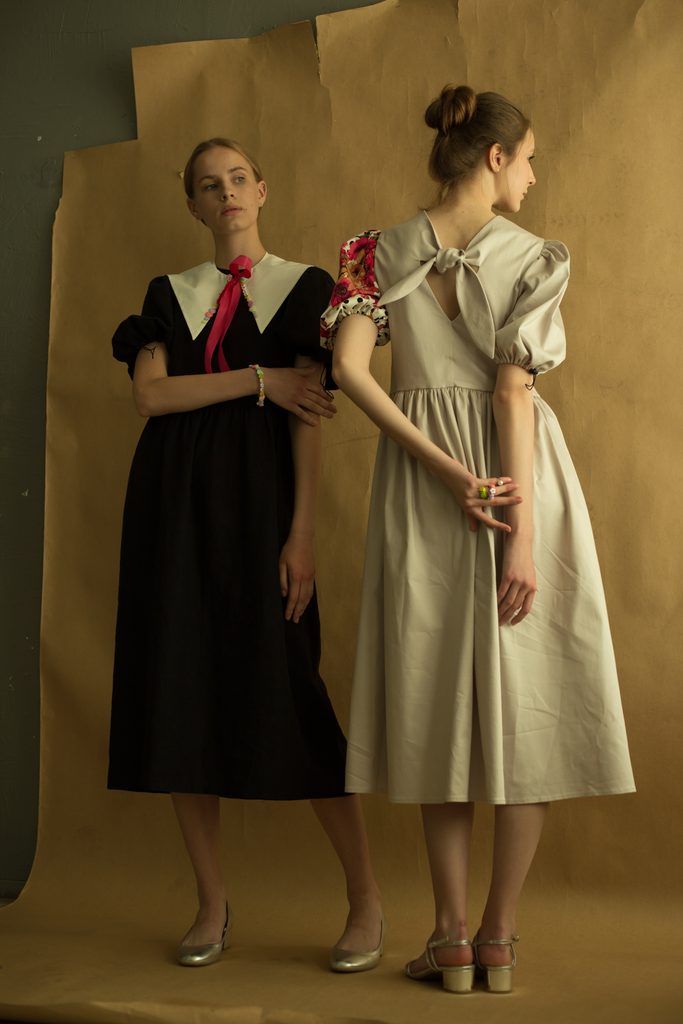
WHERE ROMANTICISM MEETS CHARACTER, CRAFT BECOMES STORY, AND CHILDHOOD IMAGERY IS REIMAGINED THROUGH FASHION.
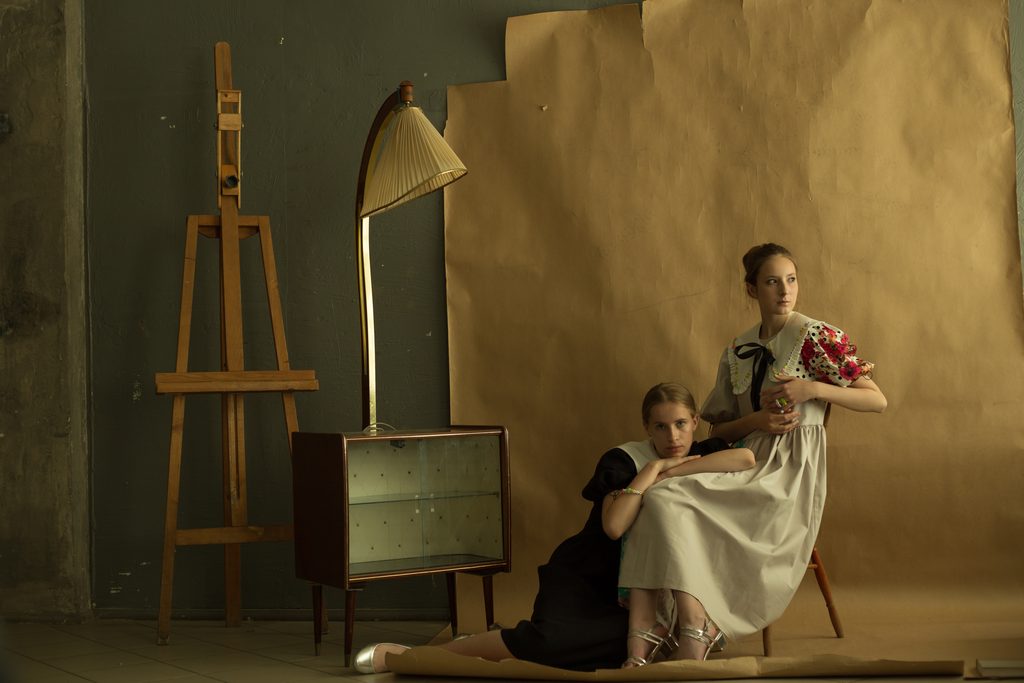
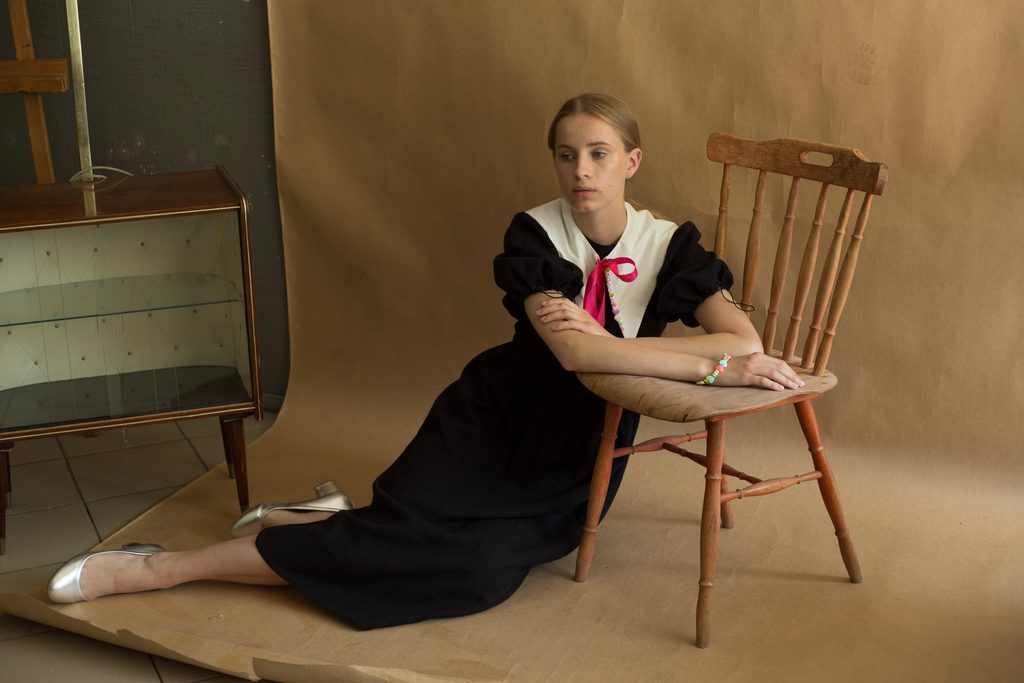
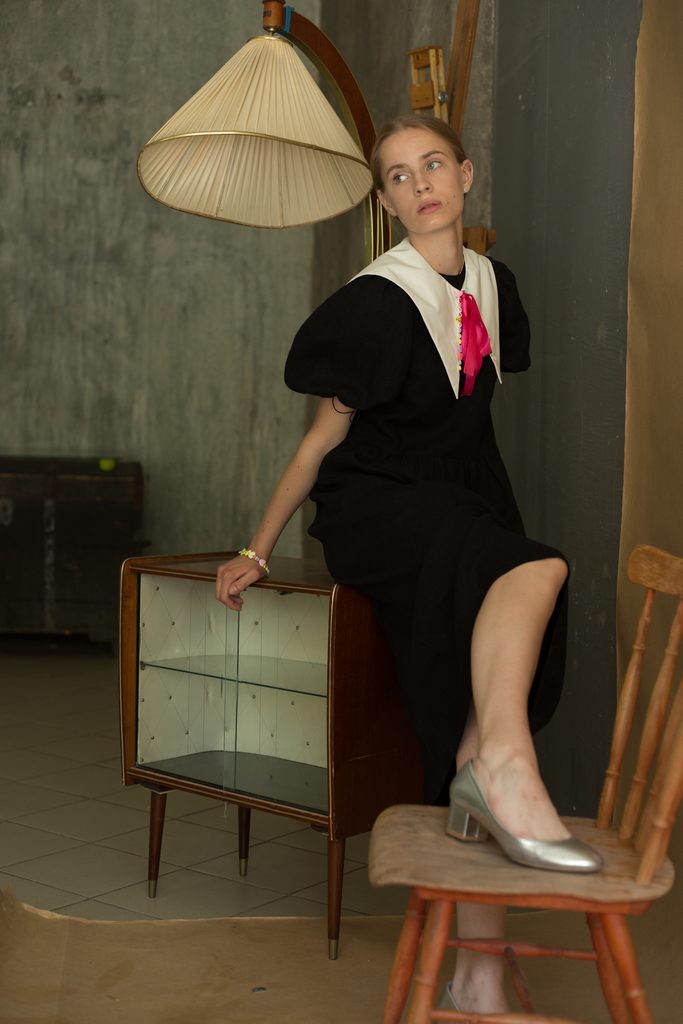
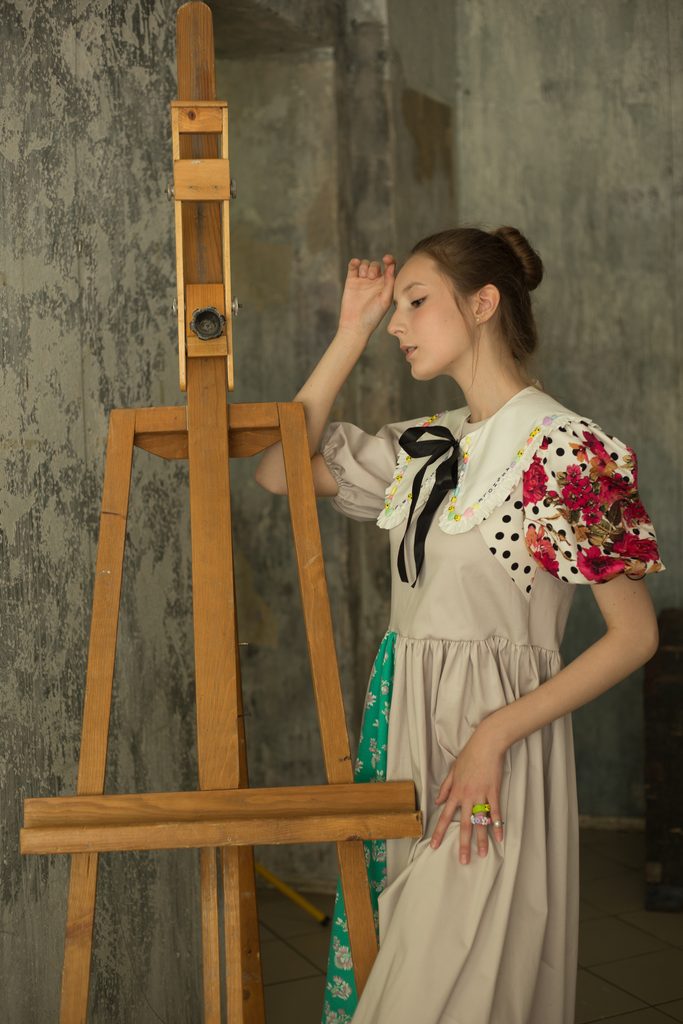
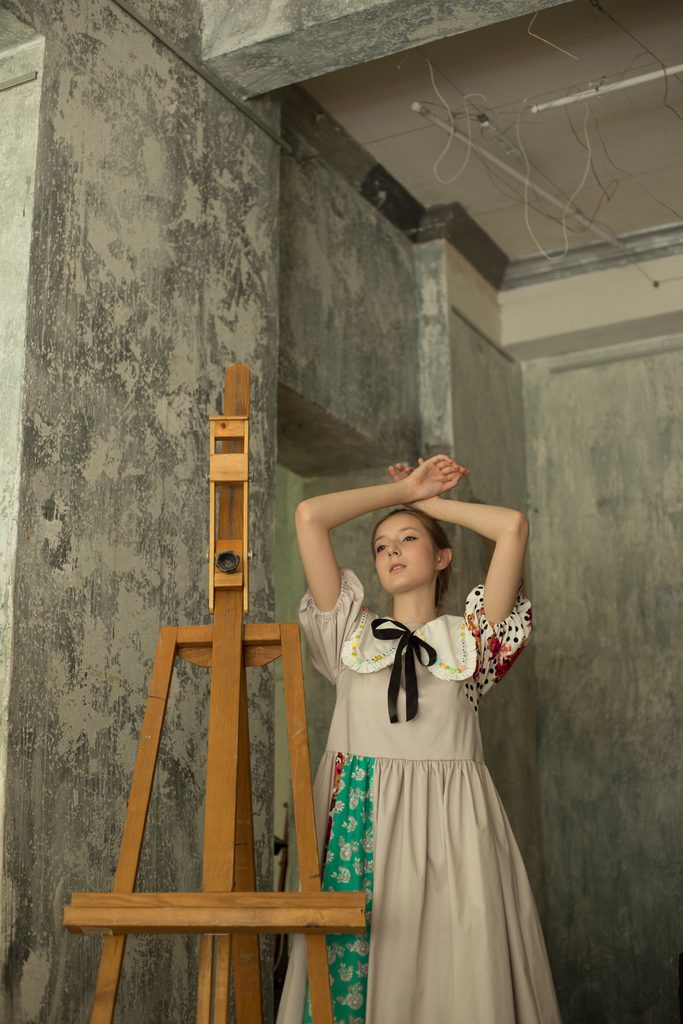
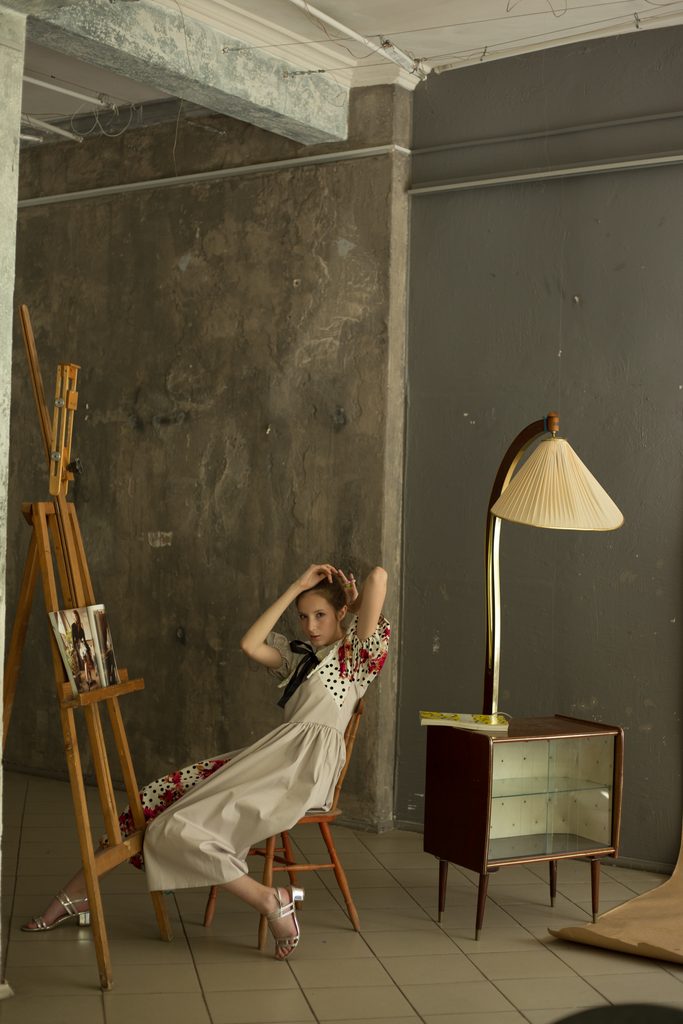
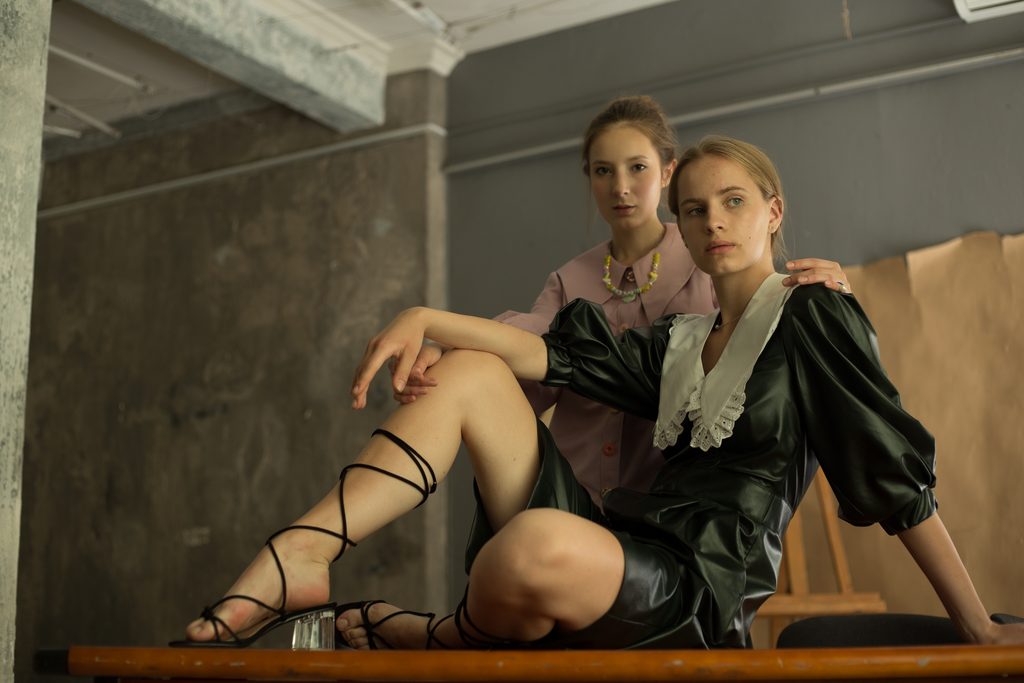
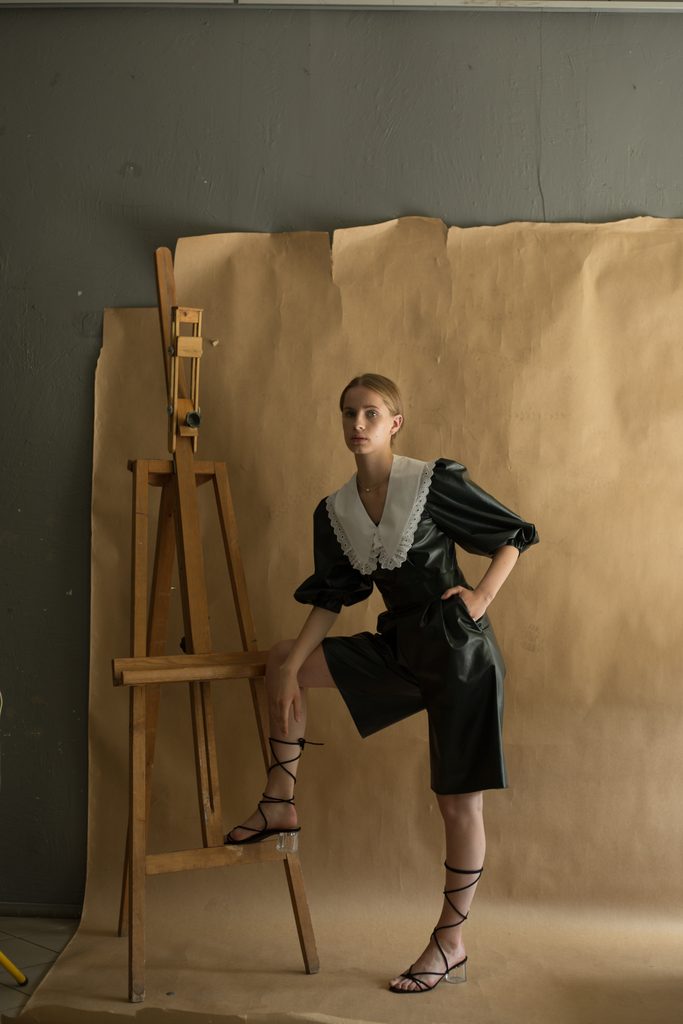
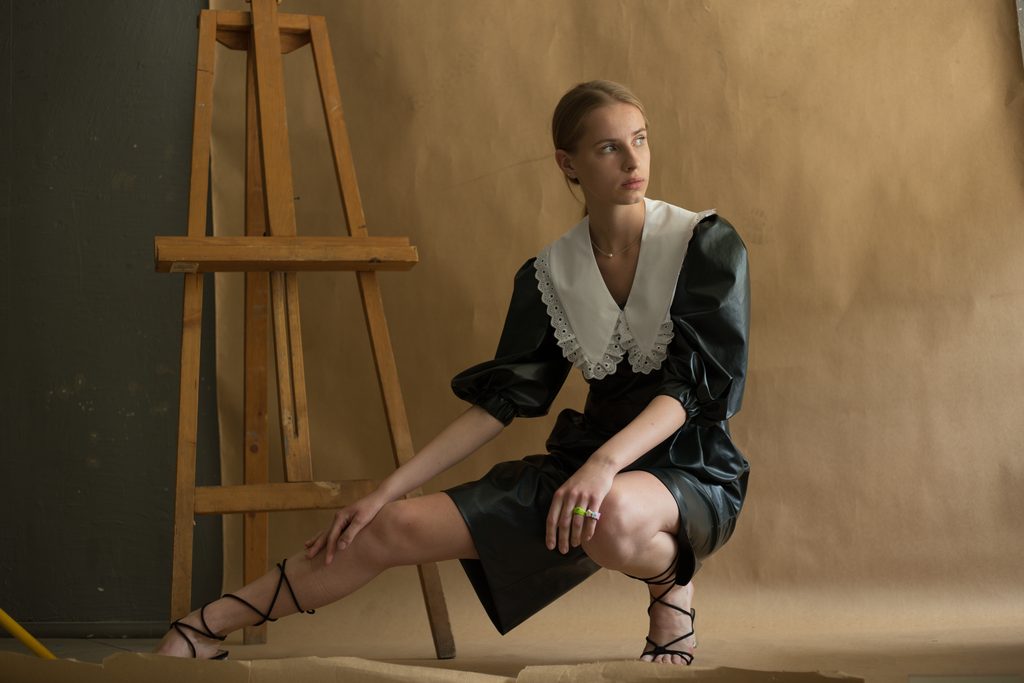
Vera Komlik approaches fashion as a language of character, creating garments that inhabit a space between romanticism, nostalgia and contemporary femininity. In her visual world, clothing becomes inseparable from storytelling. Delicate fabrics, floral embellishment, carefully considered details and softly structured silhouettes create an atmosphere that feels intimate yet theatrical. The garments carry a sense of innocence, but it is an innocence transformed, sophisticated, layered and deliberately constructed.The contrast between the two looks is particularly striking. An ivory dress, animated by floral detailing and a distinctive sculptural sleeve, evokes romantic femininity without becoming conventional. Beside it, a darker silhouette introduces another register: quieter, more mysterious and almost cinematic.
Together, the garments suggest different characters inhabiting the same imagined narrative.Vera Komlik’s aesthetic draws strength from the tension between delicacy and individuality. Her designs do not simply decorate the body; they help construct a persona around it. Colour, texture, ornament and silhouette become tools for creating atmosphere and emotional presence.There is something distinctly tactile in the work, with garments designed to be experienced through their surfaces, details and movement.
The result is fashion that feels romantic without being fragile, nostalgic without becoming retrospective, and feminine without surrendering character.Vera Komlik creates clothes with a sense of narrative — garments that do not simply dress a woman, but give her a world to inhabit.
At the Nail Awards 2026, nail art steps out of the beauty salon and into the architecture of fashion, image and identity.
There is something strange about the nail. It is part of the body, but it is also decoration. It is functional, but it can become excessive. It is intimate, yet designed to be seen. A few centimetres of keratin can carry colour, texture, symbols, craftsmanship — even status.
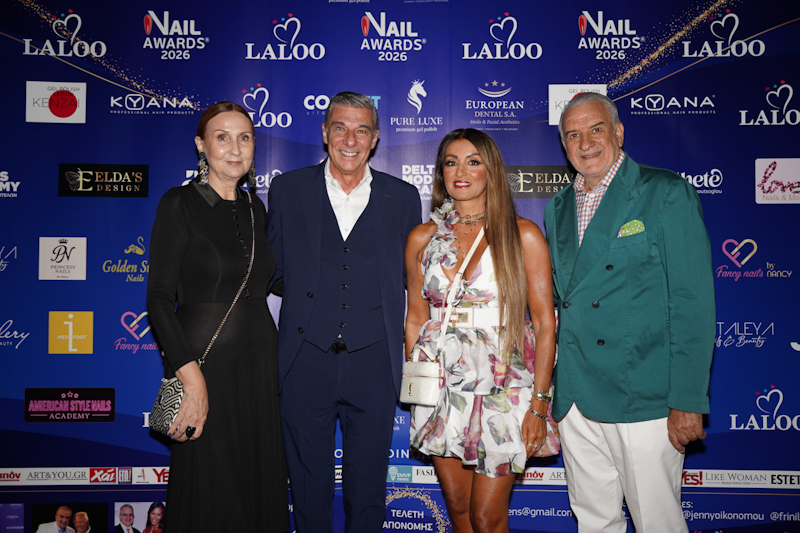
On September 16, the Nail Awards 2026 organized by the well know manager George Koutoulias, brought this miniature world into the centre of Athens, against the unmistakable backdrop of the Acropolis. The event gathered nail artists, salons, brands, educators and professionals to celebrate an industry that has long existed at the edges of fashion — while increasingly speaking its language.
One could thing that the interesting question is not who received an award. It is why we have started looking so closely at the smallest details of the body.
THE BODY AS CANVAS
Fashion has always transformed the body into a surface. Clothing constructs silhouettes. Jewellery marks territory. Makeup redraws the face. Hair changes its architecture. Nails do something more discreet. They occupy the extremities of the body — fingertips, gestures, hands. They appear when we touch, hold, move, photograph, type. They are constantly entering the frame. And the frame has changed everything.
The rise of close-up photography, social media and image-driven beauty culture has given the manicure a new visibility. What was once considered a finishing detail can now become the focal point. The nail is no longer simply part of the look. Sometimes, the nail is the look.
MINIATURE COUTURE
There is an obvious relationship between elaborate nail art and couture. Both depend upon precision. Both can transform material into surface. Both can privilege craftsmanship over practicality. Both can exist somewhere between design and spectacle. And both raise the same question: how much is enough?
A restrained manicure can communicate as deliberately as an extravagant one. Length, shape, colour, ornament and texture become decisions rather than afterthoughts. The scale may be microscopic. The design language is not. At the Nail Awards, the recognition extended across artists, salons, companies, products, education and specialist services — revealing an entire professional ecosystem rather than a single beauty trend. That distinction matters.
Why? Because when an industry develops its own creators, educators, brands, institutions and visual codes, it is no longer simply servicing another culture.
It is producing one.
BEAUTY BECOMES SPECTACLE
The evening also moved beyond nails themselves. Fashion presentations by various brands placed the awards within a wider visual environment, where fashion, beauty and performance could occupy the same space. This is increasingly how fashion events operate: The garment is only one layer. The body is another. The face is another. The hands are another. The photograph becomes another. Everything is constructed for the image. And the image, in turn, determines what deserves to be noticed.
THE POLITICS OF DETAIL
We often speak about fashion through its largest gestures: the dramatic silhouette, the runway, the designer name, the spectacular garment. But fashion is equally powerful in its details: A button, a seam, a glove, a scarlet mouth, a black nail. Details tell us how a body is supposed to be read. They can signal femininity, masculinity, rebellion, luxury, restraint, belonging or refusal. They can conform to a code — or deliberately break it.
The nail sits in an interesting position because it is both attached to the body and detachable from the identity we usually associate with the body. It can be changed overnight. And yet, for the duration of its existence, it becomes part of the person others see.
WHAT WE CHOOSE TO SHOW
Maybe this is why nail art belongs in the conversation about contemporary fashion.
Not because every manicure is fashion. But because both disciplines are ultimately concerned with the same unstable territory: the construction of appearance. The Nail Awards 2026 celebrated professionals working within that territory. But beneath the ceremony lies a broader cultural shift. We are living through an era in which almost every visible surface can become a medium.
From Lecce to Taranto, Mesagne, Bari and Vieste, Mediterranean Fashion Week 2026 offered a different idea of what a fashion week can be.
Fashion weeks are usually associated with a city: Paris. Milan. London. New York. Their identity is built around a concentrated geographical centre where designers, buyers, media, institutions and creative communities come together. Mediterranean Fashion Week 2026 proposed something different.
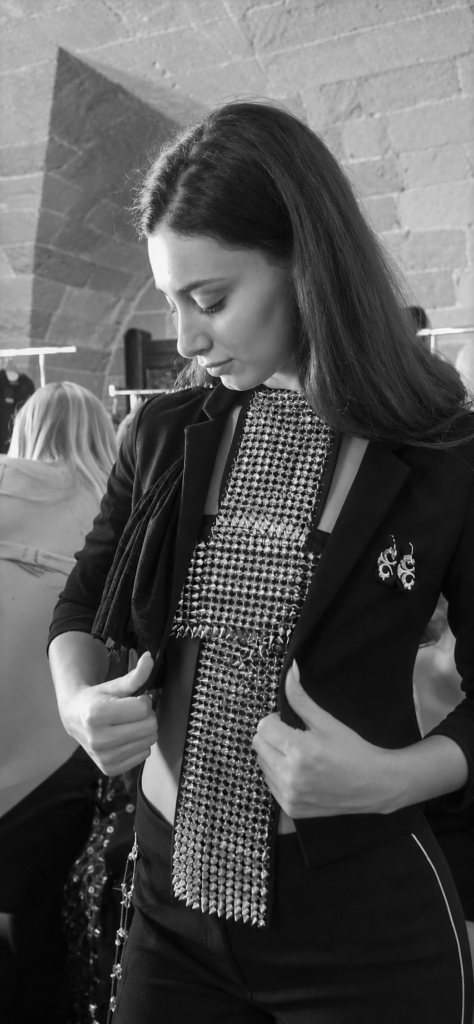
Instead of asking the fashion world to come to one central venue, it took fashion across an entire region — moving through Lecce, Taranto, Mesagne, Bari and Vieste between 1 and 5 September. The result was not simply a sequence of runway shows. It was an attempt to connect fashion with place. And that may be the most interesting aspect of the project.
Five cities, one Mediterranean narrative
The fourth edition of Mediterranean Fashion Week, conceived by Marianna Miceli, brought together more than 200 international guests, participants from around 20 countries and more than 50 international brands. Designers and creatives arrived from countries including Kazakhstan, Georgia, Uzbekistan, Turkmenistan, Kyrgyzstan, India, China, Morocco, Argentina, Portugal, Croatia, Bulgaria and others.
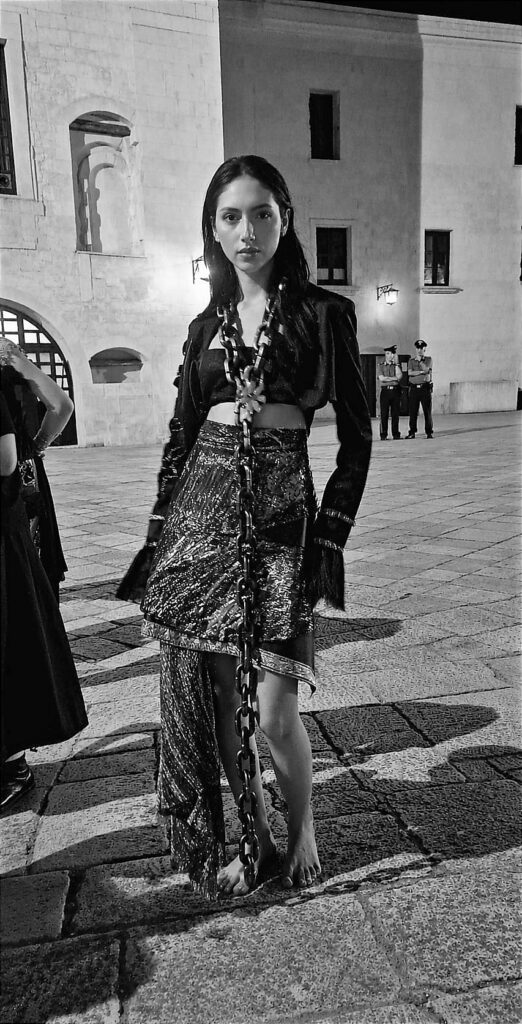
But the international character of the event was not separated from its location.It was deliberately placed within the cultural landscape of Puglia.The opening took place in Piazza Sant’Oronzo in Lecce. The second evening moved to the Castello Aragonese in Taranto, coinciding with the XX Mediterranean Games, where the fashion week was presented as a related cultural event. Mesagne followed in Piazza Orsini, Bari hosted the fourth stop, and the programme concluded in the historic centre of Vieste.
The geography was therefore part of the event itself.The cities were not simply backdrops.They became part of the narrative.
Fashion outside the traditional centres
There is something particularly significant about this model at a time when the fashion industry is becoming increasingly global. For decades, the international fashion system has been structured around a relatively small number of recognised capitals. Talent exists everywhere, but visibility does not.
Mediterranean Fashion Week approaches the problem from another direction. Rather than attempting to reproduce Paris or Milan in another location, it builds its identity around Puglia and the Mediterranean. That distinction matters.
A regional fashion week does not necessarily need to become a smaller version of an established fashion capital. It can create value precisely by offering something those capitals cannot reproduce: a specific cultural landscape, history, craftsmanship and relationship with place.
From runway to territory
The organisers positioned the event not only as fashion, but also as a vehicle for territorial promotion under the #WeAreInPuglia identity. The programme included off-catwalk activities, urban routes, exhibitions, talks and lifestyle initiatives involving local businesses.
This makes the event part of a wider cultural strategy.The runway becomes a point of entry. Around it, the city, its businesses, architecture, crafts and cultural identity become part of the experience.
This is particularly relevant for a region such as Puglia, where the visual identity of the territory is already extraordinarily strong. White stone, historic squares, Baroque architecture, coastal landscapes and centuries-old craft traditions provide a setting that cannot be separated easily from the fashion presented within it. The question then becomes less where can fashion be shown?
And more: What happens when the place itself becomes part of the fashion narrative?
Where craftsmanship meets international fashion
Another important dimension of this year’s programme was the emphasis on craft and design.From 2 to 4 September, Lecce hosted the International Craft & Design Festival in Piazza Sant’Oronzo, developed with the Eurasian Council for Craft and Design. The initiative brought together master artisans and designers from Central Asia and the Caucasus, presenting textiles, embroidery, felt work, ceramics, jewellery and other forms of traditional and contemporary craft.
This created an interesting cultural connection. The Mediterranean was not presented as an isolated creative territory. Instead, it became a meeting point between different traditions — including those historically connected through the Silk Road. In that sense, the event’s internationalism was not simply about the nationality of the designers.
It was also about the movement of techniques, cultural references and forms of craftsmanship between regions.
A Mediterranean fashion identity?
This raises a larger question. What exactly does “Mediterranean fashion” mean?
There is no single Mediterranean aesthetic. The Mediterranean is not one culture but a collection of histories, languages, religions, communities and visual traditions connected by geography and centuries of exchange. That complexity could actually become one of its greatest creative strengths.
Rather than defining Mediterranean fashion through a fixed visual formula — linen, white architecture, earthy colours, coastal imagery — the concept could be understood more broadly. Mediterranean fashion could become a conversation between heritage and contemporary design. Between local craftsmanship and international creativity. Between established traditions and emerging voices. And between the places traditionally recognised by the fashion system and those still seeking greater visibility.
A different model of the fashion week
This is perhaps where Mediterranean Fashion Week becomes most interesting. Its significance does not depend solely on the individual collections presented during the week. It lies in the model: a fashion week does not necessarily have to exist inside a single permanent fashion capital.
It can move. It can connect cities. It can use cultural heritage as infrastructure. It can bring international designers into dialogue with local communities and artisans. And it can make the territory itself part of the creative proposition.
The five-city structure of Mediterranean Fashion Week demonstrates how fashion can function as a form of cultural diplomacy: not simply presenting clothes to an international audience, but creating encounters between designers, countries, traditions and places.
Beyond the runway
The future of independent fashion weeks may depend precisely on this ability to offer something that the established capitals cannot. Not another imitation of the same fashion system. But another perspective on what fashion can represent.
Mediterranean Fashion Week 2026 placed international fashion within the cultural landscape of Puglia and showed that fashion does not always need to travel to where the established fashion system tells us it matters. Sometimes, the fashion system needs to travel elsewhere. To places with their own histories, their own crafts, their own visual languages and their own stories to tell. Because the future of fashion may not be about creating another fashion capital but about creating more places where fashion can become meaningful.