
FASHION IS NO LONGER WAITING FOR PERMISSION
Who gets to decide where fashion matters?
For decades, fashion operated according to a remarkably stable geography. Paris. Milan. London. New York. The names changed. The designers changed. The silhouettes changed. But the hierarchy remained largely intact. To be seen in the right city meant something. To enter the right calendar meant something. To be reviewed by the right publication meant something.
Fashion had its capitals and, consequently, its gatekeepers. But something has been shifting. Not loudly enough to declare the old system obsolete. Not dramatically enough to suggest that Paris or Milan have lost their power. They have not.
What is changing is maybe more interesting: the fashion map is becoming harder to control. Independent designers are appearing outside the traditional centres. lternative fashion weeks are building their own ecosystems. Cities once described as “emerging markets” are increasingly developing fashion identities of their own. And designers are no longer necessarily waiting for the established system to validate them before they begin building an audience.
To this end, the question is no longer simply where is fashion happening?
It is who gets to decide that it matters?
The capitals still matter
There is no point pretending otherwise. Paris, Milan, London and New York continue to concentrate enormous cultural, commercial and media power. Their institutions, buyers, houses, schools, publications and networks remain deeply embedded in the international fashion economy. But concentration is not the same thing as exclusivity.
Recent fashion weeks have repeatedly demonstrated how much creative attention exists beyond the largest names on the calendar. Vogue Italia, for example, has been highlighting independent designers within Milan itself — effectively pointing toward a parallel fashion ecosystem existing alongside the major houses. Meanwhile, analyses of the global fashion-week model increasingly point toward cities such as Berlin, Helsinki and Copenhagen developing their own approaches to fashion, rather than simply reproducing the logic of the traditional capitals. This distinction matters. Because the future of fashion may not be about replacing the capitals. It may be about multiplying the places where fashion can become culturally significant.

The rise of the parallel fashion system
The most interesting developments are often happening in the spaces that were once considered peripheral. A designer does not necessarily need a traditional fashion house behind them. A city does not necessarily need to be one of the Big Four to construct a meaningful fashion week. A fashion platform does not necessarily need to imitate Vogue, or reproduce the structure of a conventional magazine, to become relevant. Alternative fashion weeks make this particularly visible.
Manchester’s Alternative Fashion Week, for instance, explicitly positions itself as a community-led festival bringing together designers, performers, photographers, makers and artists outside the mainstream fashion structure. Other independent platforms are now constructing international programmes across multiple destinations, combining runway presentation with creative production, commerce, education, media and community.
This is not simply an expansion of the fashion calendar. It is an expansion of the definition of the fashion ecosystem itself. Fashion is becoming less dependent on one particular format of legitimacy.
A runway does not need Paris to exist
There is an old assumption in fashion that visibility follows geography. Go to the right city. Enter the right showroom. Get into the right calendar. Meet the right editor.
Then, perhaps, your work becomes visible. But digital media has disrupted part of that sequence.
A collection can emerge from a relatively unknown city and circulate internationally within hours. A designer can construct a visual language before entering a traditional fashion system. A photographer can create an editorial that travels further than the physical location where it was produced. And a fashion week can become meaningful not because the entire industry is watching it, but because it creates a specific cultural conversation.
That distinction is crucial. A fashion event does not have to compete directly with Milan in order to matter. It can offer something Milan cannot: a different city, a different history, a different community, a different relationship between fashion and place. The question should therefore not always be how can this become the next Paris but maybe“what can only happen here?”
The city becomes part of the collection
This is where geography becomes more than logistics. Fashion has always absorbed its surroundings. Paris produced one kind of fashion culture. London another. Tokyo another. But as more cities build their own fashion ecosystems, location itself can become part of the creative proposition.
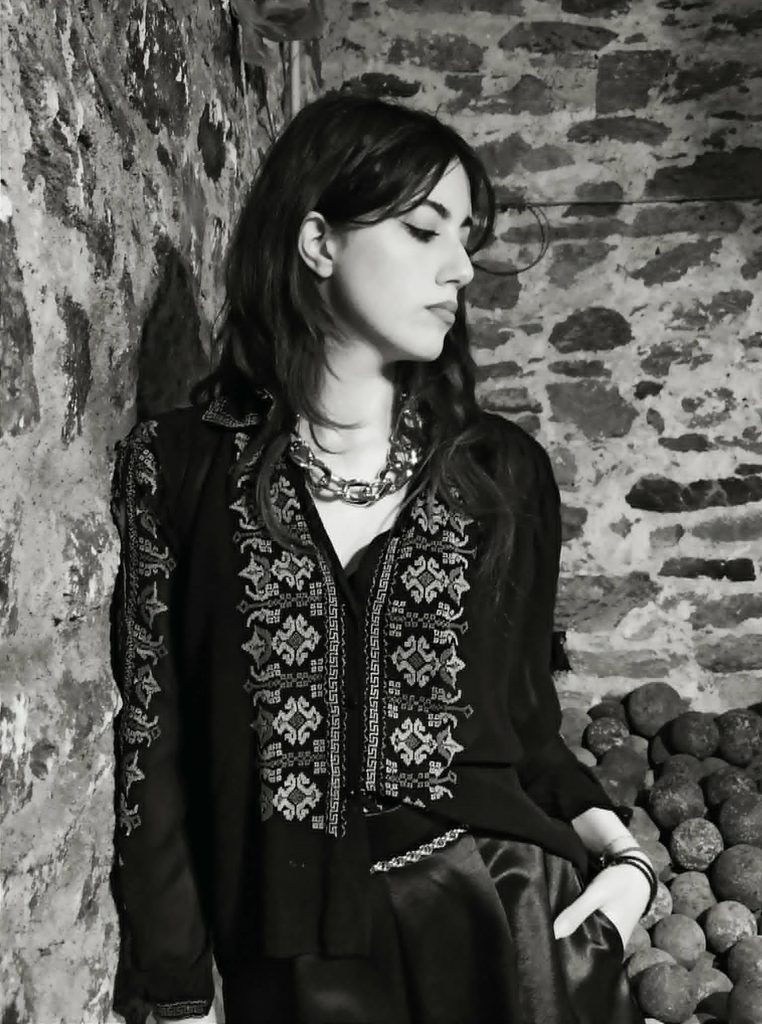
A fashion week in a Mediterranean city does not have to reproduce Milan. A Central Asian fashion platform does not need to imitate Paris. A Balkan designer does not need to erase regional references in order to appear international. A city can provide something increasingly valuable in contemporary fashion: context.
The result is not necessarily a less international fashion system. It may actually be a more international one. Because international does not have to mean culturally uniform.
The new question of authority
This brings us back to the real issue. Who decides what matters? Historically, fashion authority was concentrated among a relatively small number of institutions: luxury houses, major fashion publications, established fashion weeks, buyers and cultural gatekeepers.
Today, that authority is more fragmented. Not necessarily democratised — that would be too easy a conclusion. But fragmented. Editors still matter. Fashion weeks still matter. Luxury houses still matter. Algorithms matter. Independent publications matter. Communities matter. Designers themselves increasingly matter as publishers, storytellers and image-makers. And the audience is no longer simply waiting for an institution to tell it what deserves attention.
This creates a strange contradiction. Fashion has never been more accessible as a medium of expression. And yet visibility remains profoundly unequal. There are more platforms. More designers. More cities. More images. More fashion weeks.

But also more noise.
The new problem is therefore not simply access. It is attention.
Beyond the big four
So maybe, the most useful way to think about the current moment is not as the end of the traditional fashion capitals, but as the end of their monopoly over the imagination.
Paris can remain Paris. Milan can remain Milan. London can remain London.
New York can remain New York. And still, fashion can happen elsewhere.
Shanghai’s growing fashion ecosystem is one contemporary example: its Spring/Summer 2027 schedule includes more than 80 runway shows and presentations, while explicitly strengthening the relationship between local Chinese talent and the global market. The same logic is visible in the growing attention paid to emerging designers across different regions. Vogue’s 2026 global emerging-designer initiative, for example, drew nominations from international editions precisely to highlight different regional voices rather than presenting emerging fashion as a single geographical phenomenon.
The world is not becoming one fashion city. It is becoming many fashion conversations at once. And maybe that is the more interesting future.
Fashion does not need permission
The independent fashion movement is not necessarily asking to overthrow the established system. Some designers will eventually enter Paris. Some will show in Milan. Some will work with major houses. Others will remain deliberately outside them. The point is not where they end up. The point is that the path is no longer singular.
A designer can build a language first and seek institutional recognition later. A city can build a fashion identity before being declared a fashion capital. A publication can create a point of view before it has a large audience. A runway can become a cultural event without being part of the most prestigious calendar. Maybe this is what fashion needs now: not another centre, but more centres of meaning.
The geography is changing. The hierarchy is becoming more complicated. And the most interesting designers may no longer be waiting at the door. They are building another one.
