WHEN SUSTAINABILITY STOPS BEING A TREND
What the 10th Global Sustainable Fashion Week Reveals About the Future of Fashion
There is a moment when a fashion movement stops asking to be noticed and begins asking to be taken seriously. This is exactly what happened in Budapest. The 10th anniversary of Global Sustainable Fashion Week did not arrive merely as another celebration of ethical fashion, another procession of recycled fabrics, or another runway dressed in the language of responsibility. Its significance lies elsewhere: in the fact that sustainability is increasingly refusing to remain an aesthetic category.
It is becoming infrastructure.
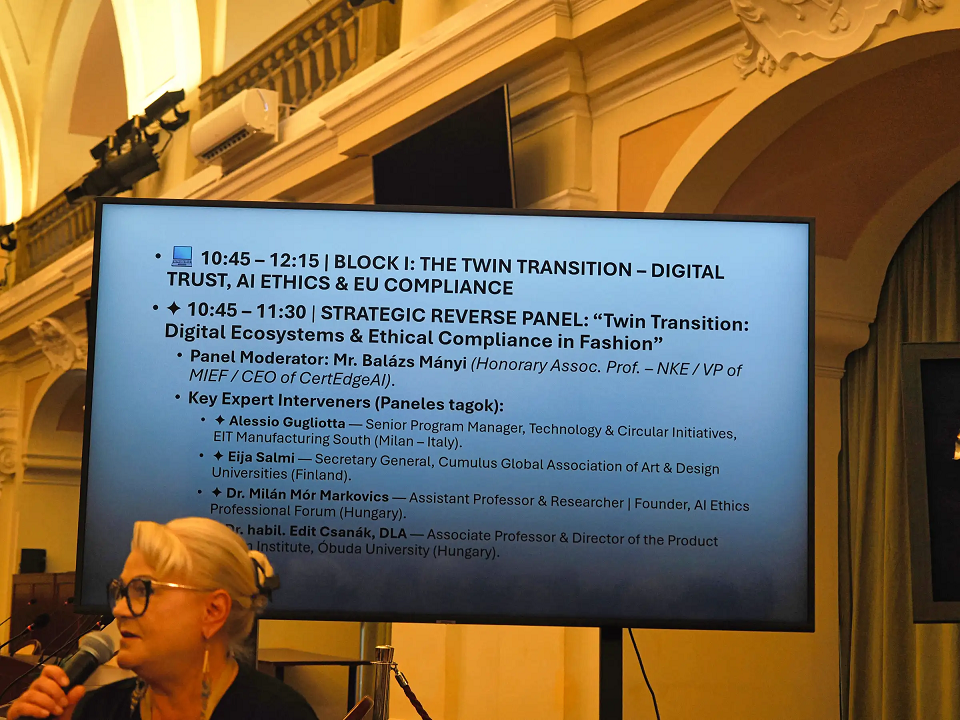
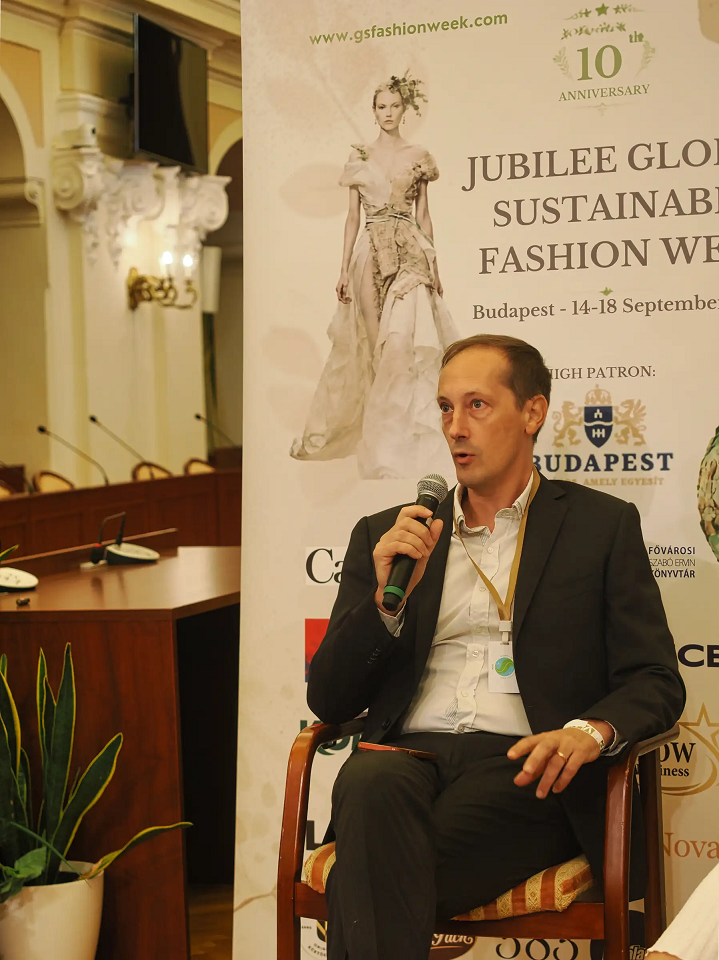
In this context, once sustainability becomes infrastructure, fashion has to change the way it thinks. Held in Budapest in September 2026, the 10th GSFW brought together designers, academics, researchers, industry professionals and international delegates from more than 32 countries, combining an eco-fashion runway with a symposium addressing circularity, lifecycle assessment, technology, regulation, education, supply chains and intellectual property. That combination matters substantially, as the most interesting question that sustainable fashion can ask today, is no longer how we can we make a sustainable collection. Rather, it is what kind of fashion system would sustainability make impossible to ignore.
THE END OF SUSTAINABILITY AS DECOR
For years, sustainable fashion has existed in a strange contradiction. It has been celebrated visually, while remaining structurally marginal. Natural fabrics, upcycling, vintage garments, deadstock, handcraft, plant dyes, recycled materials. All important. None sufficient.
The environmental problem of fashion does not begin and end with the garment.
The European Commission now approaches textiles through their entire lifecycle, from production and consumption to durability, repairability, recyclability, waste, microplastics and producer responsibility. Its Sustainable and Circular Textiles Strategy explicitly aims to move the industry away from disposable consumption and towards products that last, can be repaired and can re-enter circular systems.
UNEP makes the same structural argument from a global perspective: transforming textiles requires simultaneous changes in consumption patterns, industry practices and infrastructure. No single designer can solve a systemic problem alone. This is where the 10th GSFW becomes interesting. Its programme did not isolate sustainability inside the runway. It placed it beside policy, science, education, technology, economics. And that is a very different vocabulary.

FROM THE GARMENT TO THE SYSTEM
Inside Budapest City Hall, the discussion moved into territories that fashion traditionally leaves backstage: lifecycle assessment, supply-chain transparency, green claims, blockchain, circular business models, textile waste, industrial innovation and the emerging European regulatory landscape.
This actually becomes more radical than a simple runway. Why? Because the future of sustainable fashion will not be decided only by what a designer chooses to put on a model.
It will be decided by what happens before the garment exists and after the garment is no longer wanted: Who made it? From what? Under what conditions? Can its materials be separated? Can its history be traced? Can it be repaired? Can it be reused? Can its environmental claims be demonstrated rather than narrated? And, increasingly, can its journey through the system be documented digitally?
The GSFW’s focus on the European Union’s emerging Digital Product Passport, alongside supply-chain cybersecurity and intellectual property protection, is therefore not an accidental addition to a fashion programme. It reflects a larger transformation in which the garment itself is becoming a carrier of information, accountability and traceability. Fashion is beginning to acquire a memory: one of the most profound consequences of circularity.
THE NEW LUXURY IS NOT LESS BEAUTIFUL
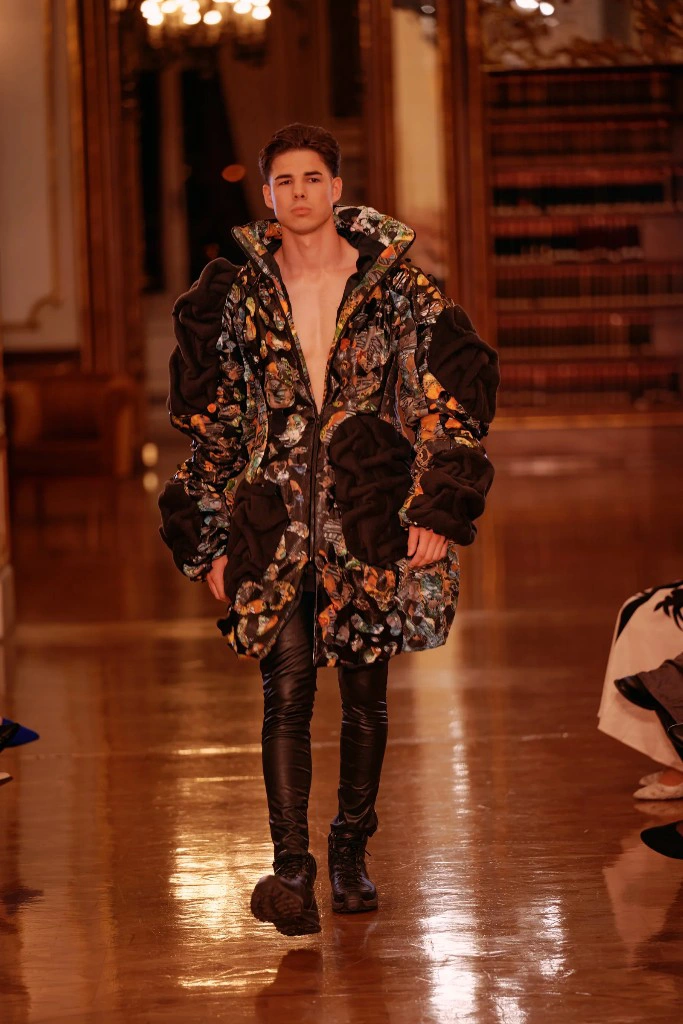
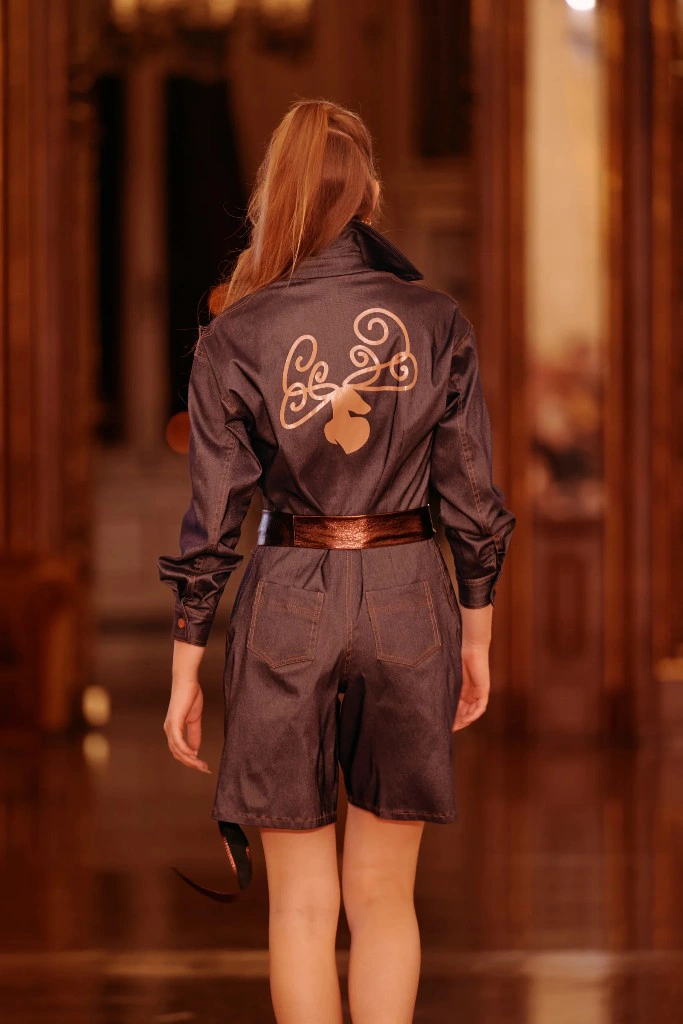
There is another misconception that sustainable fashion still has to overcome: that responsibility necessarily means aesthetic sacrifice. The 10th GSFW challenged that assumption through its runway language. Inside the historic Wenckheim Palace, sustainability appeared through zero-waste couture, transformable garments, multifunctional design, 3D printing, upcycling, heritage lace and contemporary reinterpretations of traditional craft.
This is important because luxury has always been about more than material excess.
Luxury is time. Luxury is rarity. Luxury is craftsmanship. Luxury is memory.
Luxury is the feeling that something deserves to remain. Seen through that lens, circularity is not necessarily the enemy of luxury, but a forgotten ally. A garment designed to be worn in multiple ways proposes a different relationship with desire.
A piece made from inherited lace carries memory rather than simply consuming material. A zero-waste couture construction asks the designer to treat every fragment as consequential. And a material that can be traced, repaired, disassembled or re-entered into another life becomes valuable precisely because its existence does not end with the first owner.
THE GLOBAL VALUE OF A LOCAL STAGE
There is also something significant about Budapest. Sustainable fashion is often narrated through the dominant fashion capitals, as though innovation must pass through Paris, Milan, London or New York before it becomes globally legible.
GSFW offers another geography.
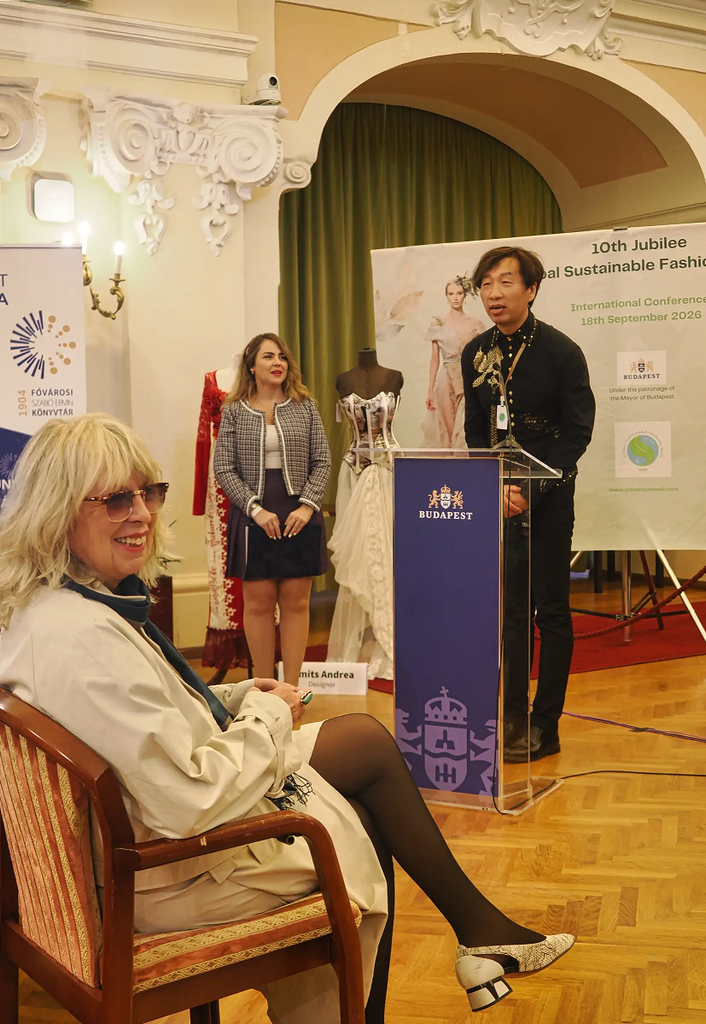
Its own history began in Budapest in 2015, when the National Fashion League Hungary Association established an Eco Team to encourage collaboration around a more sustainable fashion industry. It subsequently developed into an international platform combining fashion, research, education and dialogue.
That evolution matters. Sustainability does not belong to one capital. It is inherently transnational because the textile value chain itself is transnational. A fibre may originate in one country, be spun in another, manufactured in another, sold on another continent and discarded somewhere entirely different. The environmental consequences do not respect fashion’s geography. This is why an international gathering of designers, academics, researchers, policymakers and industry professionals has value beyond the event itself: it creates a temporary geography in which different fragments of the fashion system can see one another.
THE RUNWAY AS ARGUMENT
The runway matters. Not because fashion needs another spectacle, but because clothing can make abstract ideas visible. A policy document can speak about circularity. A lifecycle assessment can quantify impact. A regulation can impose responsibility. But a garment can demonstrate an alternative relationship with material in a single image.
At GSFW, the runway became a kind of visual laboratory. Transformability proposed longevity. Upcycling proposed memory. Zero-waste construction proposed precision.
Digital fabrication proposed technological possibility. Traditional craft proposed continuity. And together they suggested that sustainability does not require fashion to abandon desire. So, to this end, the question now is not whether fashion can become sustainable.The more difficult question is whether fashion is prepared to redefine what it means to create value in the first place.
That is where the next decade begins.