
THE HAND, THE MACHINE, THE SPECTACLE
Why Vogue World: Milano was more than another fashion event
On September 22, Milan became the stage for the fifth edition of Vogue World. But this time, the spectacle was not simply about fashion. Set inside the Galleria Vittorio Emanuele II, on the opening day of Milan Fashion Week, the event constructed a much larger argument: what happens to fashion when heritage, craftsmanship, technology and spectacle occupy the same space?
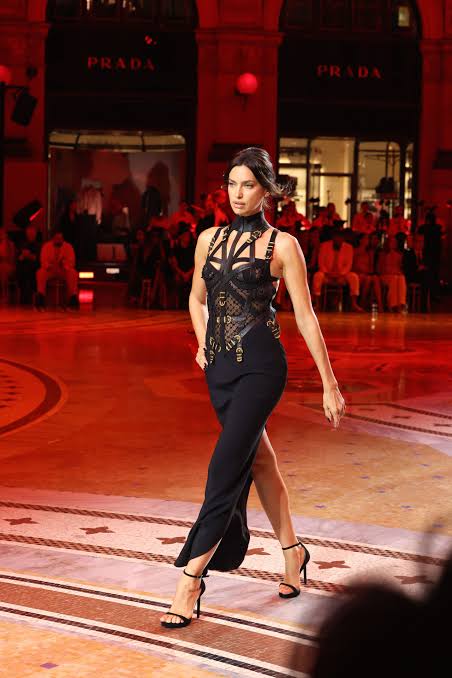
That question gave Vogue World: Milano its reason to exist. The show unfolded in five acts, moving from the Renaissance and artisanal production through Italy’s industrial history and Made in Italy mythology, before entering “The Age of Intelligence” and finally “The Imagination Revolution.” The chronology was almost deliberately ambitious: fashion was presented not as a sequence of trends, but as a continuous negotiation between hand, machine and imagination.
And the location mattered. The Galleria is not simply an impressive backdrop. It is architecture that already carries centuries of commerce, culture and visual memory. Placing fashion inside it transformed the runway into something closer to a public cultural performance — fashion occupying the architecture of the city rather than temporarily constructing its own world. And this it, I believe, where Vogue World: Milano becomes most interesting.
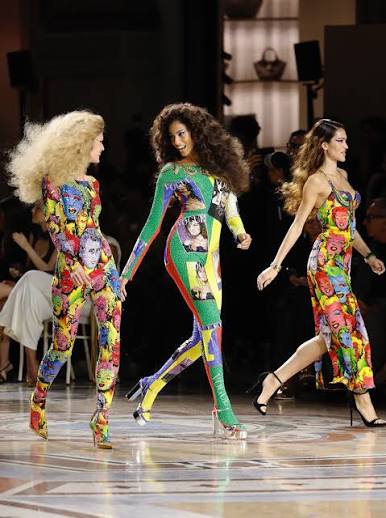
Because at a moment when fashion is increasingly surrounded by artificial intelligence, digital production and automated creativity, the event chose to place human making at the centre of its narrative. Then came the robots. During the fourth act, humanoid robots from Unitree Robotics walked alongside models, turning the show’s conceptual tension into an actual image: the machine entering the runway. Vogue described their presence as a way of addressing the beginning of the robotics era; the accompanying visual work also questioned what technology can reproduce and what remains dependent on human experience, emotion and taste. It was an intentionally strange interruption. And fashion needs those interruptions.
The most compelling aspect of the event was therefore not the celebrity density, although the cast was enormous, from Gigi Hadid and Vittoria Ceretti to Cardi B and Alicia Keys, but the attempt to make fashion itself the subject rather than merely the object of attention. There was also a less visible dimension.
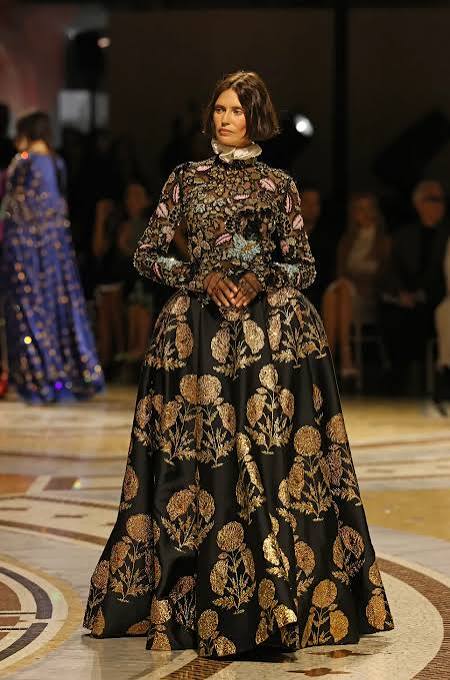
Milano pledged at least €2 million toward the redevelopment of the Quarto Oggiaro Library, transforming it into a cultural hub for fashion, music, artistic talent, technology and community. That decision extended the event’s argument beyond the historic centre of Milan: if fashion is a cultural force, its infrastructure cannot exist only where fashion already has power. This is why the event is worth looking at beyond the images. It was by all means a spectacle. But it was also an argument about where fashion comes from, where it is going, and what it risks losing along the way.